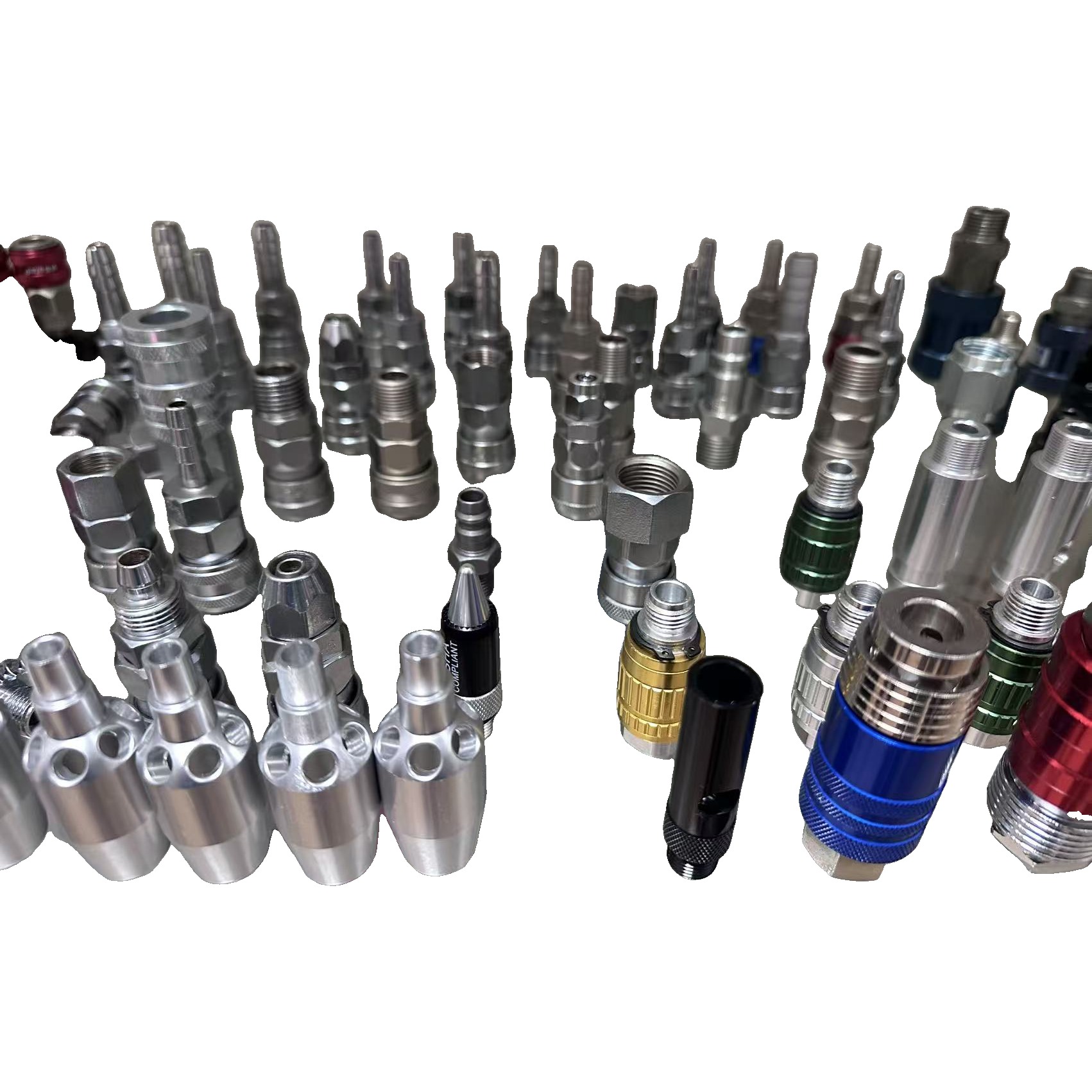
Buying pneumatic fittings looks simple until the first batch arrives with the wrong thread, the wrong profile, or no paperwork. As a working Ningbo factory, we have seen both sides of the table. This checklist is the one we wish every buyer would run before they send a deposit.
1. Factory or trading company?
This is the first question because it shapes every other answer. A factory gives you the real production cost, direct engineering support, fast sample turnaround and full traceability. A trading company adds a margin and a translation step between you and the people who machine the parts. For small one-off orders a trader is convenient; for OEM programs and quality control it is a risk layer you do not need. Ask for the workshop address and a recent production photo — a real factory will share both.
2. Do they machine in-house?
Couplers and precision fittings are turned parts. A supplier that machines in its own CNC workshop controls tolerances, lead time and confidentiality; one that outsources every cut is a pass-through with less control. In-house machining also means they can make a one-off sample or a small trial batch without begging a subcontractor. Ask what percentage of the range they make themselves versus source.
3. What is the real MOQ — and can SKUs be mixed?
MOQ drives your working capital. A typical factory MOQ is around 1000 pcs per item, with mixed-SKU consolidation across the range allowed in one purchase order — so you can build a container of 20 SKUs at 1000 each rather than 20,000 of one. Custom tooling volume is confirmed from the drawing, and trial batches are often supported against a forecast. Beware anyone who will not state an MOQ plainly; it usually hides a trading layer and a surprise minimum.
4. Samples: cost, lead time, free?
Sampling is the cheapest insurance you have. Stock-item samples should ship free in 3–5 days for evaluation; custom samples follow drawing review and typically take 7–10 days. Before committing to production, a sample lets you verify the profile, thread standard, material and finish with your own eyes. A supplier reluctant to sample is a supplier to walk away from.
5. Certifications and material documents
For export, the documents that usually matter are material certificates (RoHS / REACH) and a dimensional inspection report. CE / ISO 9001 documentation can be arranged per order. The key is precision: ask the supplier to state exactly which document ships with your batch. Vague "all certified" answers are a red flag — a real factory names the standard and the scope.
6. Lead time, Incoterms and shipping
Mass production is normally 15–30 days after sample approval. Confirm the Incoterms: most factories ship FOB Ningbo / Shanghai and support DDP on request. Get the timeline in writing and align it with your forecast so you are not emergency-air-freighting because of a slipped date. A supplier who quotes "2 weeks" for everything is guessing.
7. OEM / ODM and IP protection
If you are building a private-label line, confirm the supplier supports OEM and ODM — your logo, colour, engraving and packaging. Then ask the IP question directly: how is your drawing protected, and will they refuse to sell your custom part to your competitor? A factory that machines in-house and values repeat business will give you a straight answer and a confidentiality understanding.
Red flags vs green flags
| Signal | Red flag | Green flag |
|---|---|---|
| Identity | Won't share workshop address / photos | Shares address, welcomes audit |
| MOQ | "No minimum" or refuses to state | Clear per-item MOQ + mixed-SKU OK |
| Samples | Reluctant, expensive, slow | Free stock samples in 3–5 days |
| Docs | "All certified" | Names exact standard + scope |
| Lead time | "Always 2 weeks" | Realistic 15–30 days, in writing |
| Engineering | No drawing review | Reviews drawing, suggests improvements |
Why audit the factory
For any meaningful volume, audit before you scale. A real factory welcomes virtual or on-site audits — facility, process, QC and traceability. Walking the workshop (or a live video tour) tells you more in 20 minutes than a trading company's slide deck does in an hour. You verify real capacity, real headcount and real process control, not a story.
Our answers, plainly
- Factory: JIAJIE is the export brand of Ningbo Haishu Gaoqiao Jiajie Pneumatic Tools Factory, own CNC workshop since 2005.
- In-house: we turn bar stock and inspect to drawing in our own workshop.
- MOQ: ~1000 pcs/item, mixed-SKU consolidation across 500+ SKUs in one PO.
- Samples: free stock samples in 3–5 days; custom 7–10 days.
- Docs: RoHS / REACH + dimensional reports on request; CE / ISO 9001 arranged per order.
- Lead time: 15–30 days after sample approval; FOB Ningbo / Shanghai, DDP on request.
- OEM/ODM: supported across the full range and via our custom programs, with confidentiality on custom drawings.
Frequently asked questions
Is it better to buy pneumatic fittings from a factory or a trading company?
For volume and custom work, buy from a factory. You get the real production cost, direct engineering support, faster sample turnaround and full traceability. A trading company adds a margin layer and a translation step between you and the people who machine the parts — fine for tiny one-off orders, risky for OEM programs and quality control.
What is a realistic MOQ for pneumatic couplers and fittings?
A typical factory MOQ is around 1000 pcs per item, with mixed-SKU consolidation across the range allowed in one purchase order. Custom tooling volume is confirmed from the drawing; trial batches are often supported against a forecast. Beware suppliers who refuse to state an MOQ clearly — it usually hides a trading layer.
Should I get samples before ordering a full batch?
Yes. Stock-item samples normally ship free in 3–5 days for evaluation; custom samples follow drawing review and typically take 7–10 days. Sampling is the cheapest way to verify the profile, thread, material and finish before you commit to production.
Which certifications matter for pneumatic fittings?
For most export buyers: material certificates (RoHS / REACH) and a dimensional inspection report. CE / ISO 9001 documentation can be arranged per order. Ask the supplier to state exactly which document ships with your batch — vague 'all certified' answers are a red flag.
Can I audit the factory before placing a large order?
Yes, and you should for any meaningful volume. A real factory welcomes virtual or on-site audits — facility, process, QC and traceability. Auditing the factory directly verifies real capacity far better than a trading company's slide deck can.
Related: MOQ, Lead Time & Factory Audit: Sourcing Pneumatic Fittings from a China Factory — the deeper dive on our own numbers and audit process.
Ready to source? Request a quote or browse the quick couplers, stainless fittings, air-line fittings and air-preparation units we machine in-house.